When a criminal investigation goes cold, the primary barrier to resolution is frequently a lack of spatial context. A vehicle may be abandoned on a city street, a piece of clothing found in a dumpster, or a illicit package intercepted at a border checkpoint—yet investigators are left completely blind as to where those physical objects actually originated. In the absence of digital tracking data or eyewitness accounts, detectives must look to the microscopic natural world for answers. Locked within the fibers of a jacket, the air filters of a car, or the nasal cavities of a victim sits a permanent botanical tracking network.
The Indestructible Nature of the Pollen Grain
To understand why pollen serves as an excellent tracking mechanism, one must understand its extreme resilience. While we perceive pollen as fragile yellow dust that causes seasonal allergies, it is chemically one of the most indestructible organic materials on Earth.
The outer wall of a pollen grain, known as the exine, is composed of an incredibly tough biopolymer called sporopollenin. This compound is highly resistant to heat, massive pressure, chemical acids, and natural enzymatic decay. Because of sporopollenin, a pollen grain can remain perfectly preserved for thousands—or even millions—of years inside soil, clay, or historical artifacts.
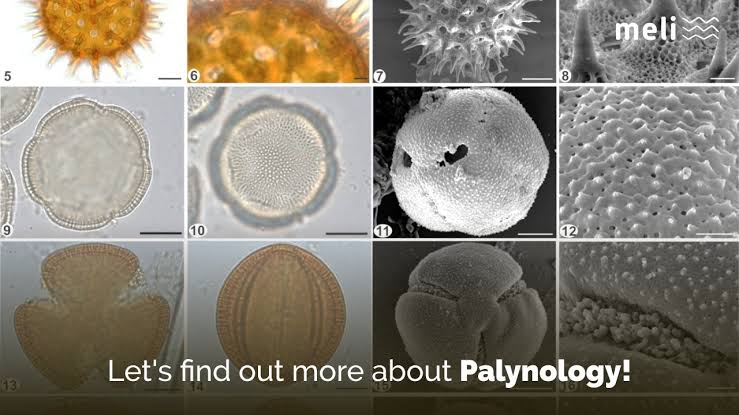
Furthermore, as displayed under advanced magnification, pollen grains are not uniform spheres. Every plant species produces pollen with a completely distinct, exotic geometric morphology. Grains can be perfectly spherical, triangular, oblong, or covered in intricate patterns of spikes, grooves, ridges, and porous openings. This allows a palynologist to confidently identify the exact genus and often the specific species of plant from which a single grain originated.
The Concept of the Palynological Profile
Plants do not grow uniformly across a continent; they are deeply restricted by local climate, soil chemistry, elevation, and regional ecology. Consequently, every square mile of terrain possesses a unique Palynological Profile—a localized botanical signature composed of the specific ratios of different plant pollens settling in that precise environment.
[Pine Forest Profile]   ---> 85% Pine Pollen, 10% Fern Spores, 5% Oak Pollen
[Urban Grassland Profile] ---> 60% Fescue Grass, 30% Dandelion, 10% Local Ornamental Shrubs
When a forensic analyst examines a sample—such as dust vacuumed from a suspect’s floor mats—they do not just look for a single exotic plant. They count hundreds of grains to calculate the exact percentage distribution of different species.
If a suspect claims they have never left a concrete urban environment, but an extraction reveals a high concentration of rare marsh orchid pollen mixed with specific swamp fern spores, the overall palynological profile places that suspect directly inside a wetlands ecosystem, exposing a blatant fabrication.
The Mechanics of Sample Extraction and Analysis
Because pollen is entirely invisible to the naked eye, collecting samples requires extreme care to prevent contamination from the modern ambient atmosphere. When an item of evidence arrives at the laboratory, palynologists operate inside strictly controlled clean rooms with dedicated air filtration systems.
The extraction process follows a rigorous scientific protocol:
-
Chemical Digestion: The collected dust or sediment sample is treated with highly volatile acids (including hydrofluoric acid). Because sporopollenin is naturally resistant to acid, this process completely destroys all the background minerals, dirt, and non-pollen organic matter, leaving behind a highly concentrated residue of pure pollen grains.
-
Microscopic Evaluation: The remaining sample is mounted on a slide and studied using Polarized Light Microscopy or Scanning Electron Microscopy (SEM). The analyst methodically catalogs the grain shapes, surface textures, and structural apertures.
-
Statistical Correlation: The analyst compares the recovered ratio of species against national botanical maps and seasonal pollination calendars to pinpoint the exact geographic location and the specific time of year the exposure occurred.
Real-World Application: Cracking the “Nowhere” Case
To understand the practical power of forensic palynology, consider a classic cold case scenario involving an unidentified victim discovered in a generic dirt ditch along a major interstate highway.
The initial police investigation assumes the victim was murdered at that location. However, a forensic palynologist takes nasal swabs from the victim and scrapes the mud from their clothing. The analysis reveals a startling anomaly: the local highway ditch is surrounded entirely by oak trees and standard highway grasses, but the victim’s clothing and nasal passages are saturated with the pollen of the Agave tequilana (Blue Agave) and a highly specific species of desert cactus.
[Discovery Site]  ---> Oak Trees & Highway Grasses (Zero Match)
[Pollen Analysis] ---> Blue Agave & Desert Cactus -> Points to a Specific Southwest Valley 300 Miles Away
This single microscopic insight completely redirects the architecture of the case. It proves the highway ditch is merely a dump site, and the actual crime scene sits 300 miles away inside a specific arid valley where those two plants natively coexist. By refocusing detectives on the correct geographic territory, a dead-end case transforms into an active, localized homicide investigation.
Conclusion: The Permanent Stamp of Nature
Forensic palynology proves that it is virtually impossible to move through the natural world without interacting with its invisible systems. Every step we take, every breath we draw, and every object we place on the ground involves a silent exchange of botanical information. An offender can use gloves to avoid fingerprints, wear a protective suit to block touch DNA, and destroy their digital trail, but they cannot force the local flora to stop shedding its indestructible micro-witnesses.
By reading the geometric codes locked within sporopollenin walls, forensic scientists turn ordinary dust into an unalterable map of human travel. In the modern pursuit of justice, nature remains the ultimate historian, ensuring that no matter how isolated a crime scene may be, its microscopic signature remains permanently stamped upon the guilty.