Reading the Soil: How Forensic Geology Maps Crime Scene Trajectories via Mud and Dust

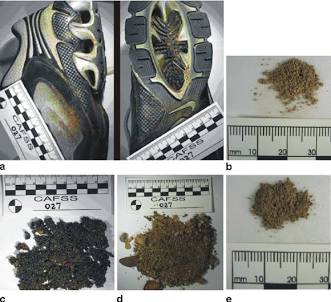
In the collective imagination of true crime and criminal investigation, trace evidence usually invokes thoughts of fibers, microscopic hairs, or invisible fingerprints. Yet, one of the most structurally sound, naturally diverse, and legally unshakeable forms of physical evidence sits completely exposed beneath our feet. Soil is the ultimate geographic diary. It is an incredibly complex, … Read more

The Touch DNA Revolution: Extracting Profiles from Invisible Skin Cell Deposits

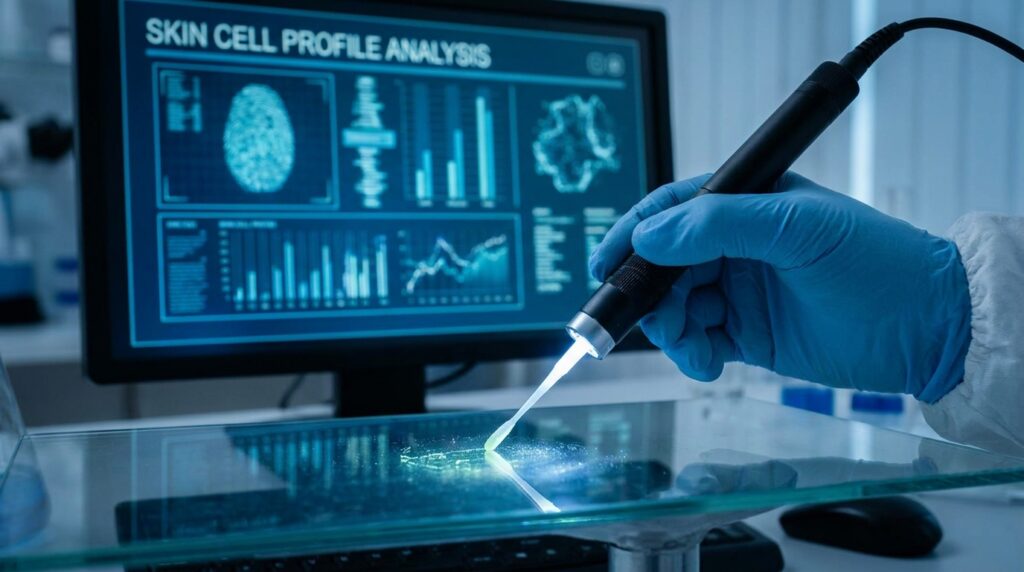
For decades, the presence of biological evidence at a crime scene was measured by what could be clearly seen with the naked eye. Investigators scoured surfaces for distinct, visible stains of body fluids—primarily blood, saliva, or semen. If an offender was careful enough not to bleed or leave behind clear fluid traces, the physical linkage … Read more

Reconstructing the Midnight Window: The Forensic Accounting of Sleep and Activity Data

In the lexicon of criminal defense, few phrases are as ubiquitous or as difficult to challenge as the midnight alibi. When a violent crime occurs in the dead of night, suspects routinely claim they were safely insulated inside their homes, fast asleep until morning. Historically, unless a witness stepped forward to dispute this claim or … Read more

The Chronological Intersection: Mapping the Overlap of Suspect and Victim Digital Trails

In historical criminal investigations, establishing that a suspect and a victim were in the exact same physical space at the exact same time was one of the most frustrating hurdles a prosecution could face. Unless an independent eyewitness stepped forward or a security camera captured both individuals in a single, well-lit frame, the defense could … Read more

Shattered Alibis: How Digital Toll Tunnels and Smart Car Logs Anchor Suspect Movements

For generations of criminal investigators, verifying a suspect’s alibi was a complex exercise in human verification. Detectives had to interview witnesses, cross-reference gas station receipts, and analyze blurry, far-away surveillance footage. If a suspect claimed they were asleep in their own bed fifty miles away during a crime, and had a family member willing to … Read more

The Golden Hour: Why the First 60 Minutes of a Missing Person Investigation Dictates the Outcome

In criminal justice and search-and-rescue (SAR) operations, there is a fundamental rule that governs the survival metrics of the missing: time is a descending curve. While popular television procedurals often propagate the myth that law enforcement must wait 24 or 48 hours to officially register a missing person case, the structural reality of forensic science … Read more

The Geometry of Crime: How Geographic Profiling Tracks Serial Offenders

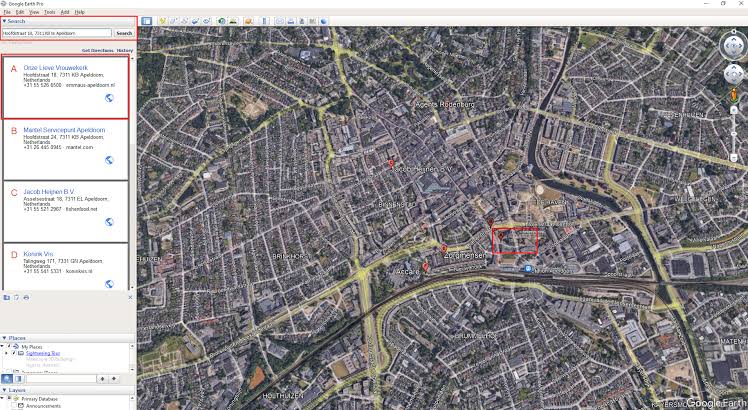
When tracking a serial offender, traditional criminal profiles tend to focus almost exclusively on the who and the why. Behavioral analysts dive deep into psychology, analyzing signatures, victim selection, and motives to build a psychological mirror of an unknown suspect. However, in large-scale investigations, psychological traits alone rarely provide a specific address. To narrow a … Read more

The Myth of the Mary Celeste: An Evidentiary Review of Maritime History’s Greatest Cold Case

On December 5, 1872, the crew of the British brigantine Dei Gratia spotted a silhouette drifting erratically in the Atlantic Ocean, roughly 400 miles east of the Azores. The ship was the Mary Celeste, a 103-foot merchant brigantine that had departed New York City nearly a month prior, bound for Genoa, Italy. When the boarding … Read more

Beyond CODIS: How Investigative Genetic Genealogy is Cracking Decades-Old Cold Cases

For decades, forensic DNA profiling was viewed as the ultimate mathematical absolute in criminal justice. If a perpetrator left biological material at a crime scene, law enforcement could isolate the sample, run it through a database, and wait for a match. But for thousands of cold cases dating from the 1960s through the early 2000s, … Read more